
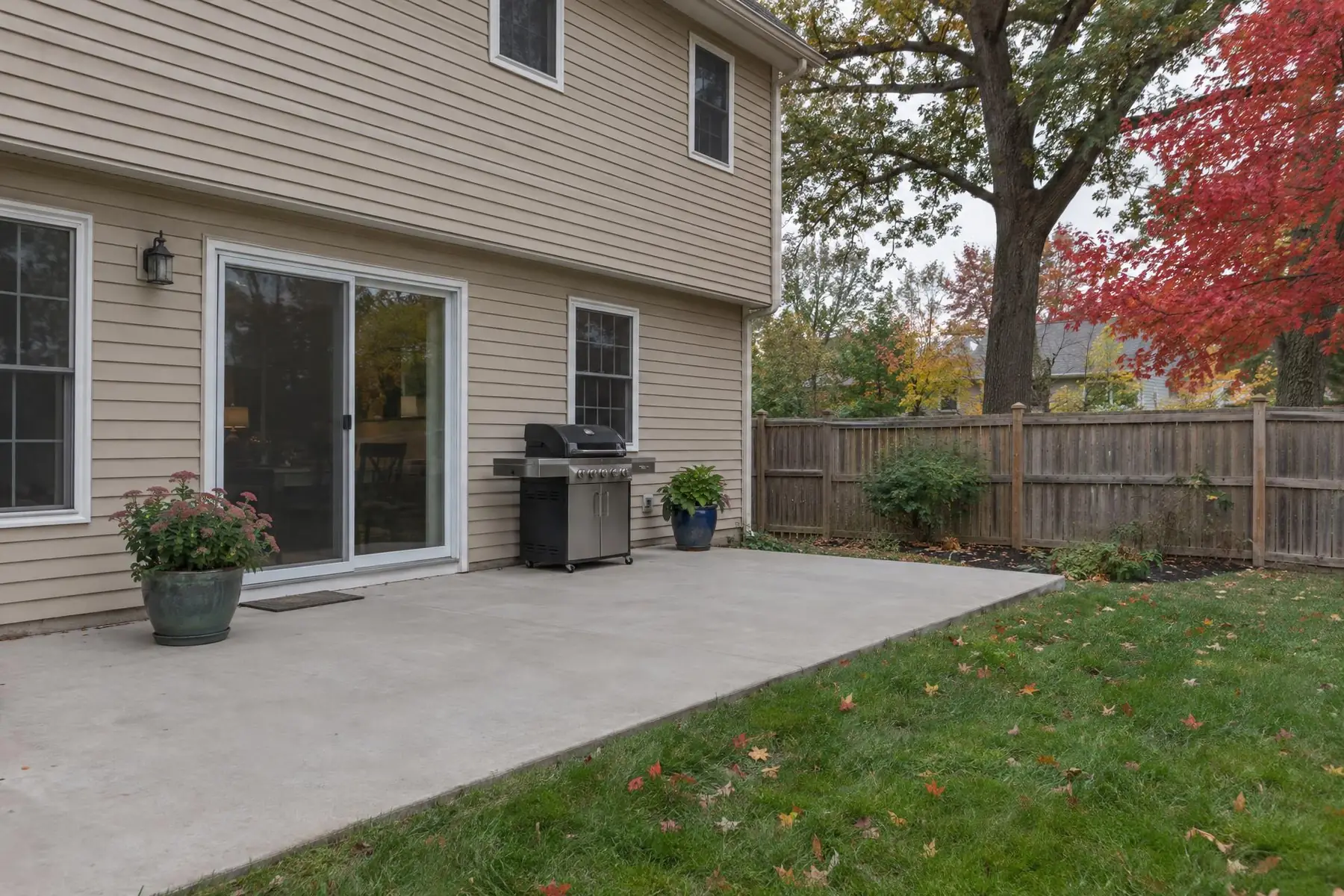
Smooth broom-finished concrete patio behind a sided house with a grill, potted plant and wood fence

Concrete Repair Hamilton New Jersey: Concrete Crack Repair, Concrete Resurfacing and Concrete Leveling

Experienced Concrete Repair and Concrete Resurfacing in Hamilton, NJ and Mercer County

When a crack keeps widening, a slab has dropped or the surface is flaking, Hamilton Concrete handles concrete repair for Hamilton Township, NJ, before the slab needs replacing. Our work covers spalling repair, concrete crack repair, concrete leveling and resurfacing on driveways, walks, steps and patios across Mercer County. You end up with a slab that is sealed against water, safe to walk on and good for more winters.

Why homeowners choose us:

  • NJ-registered home improvement contractor
  • 20+ years pouring concrete across Mercer County
  • Permits handled we file the township application and schedule the inspections
  • Free written estimates with every line of the price broken out

The crew has 20+ years of concrete work in Mercer County, so it reads a failing slab the way a mechanic reads an engine noise. We look for why the concrete failed and fix that cause with the damage. Your free written estimate names each repair on its own line, so a patch is priced as a patch and a replacement as a replacement.

Get a FREE Concrete Quote

What Concrete Repair Involves in Hamilton, NJ

Repair is cheaper than replacement only when it is done to the cause, so each job starts by finding where the water is getting in. Every repair we take on in Hamilton uses some mix of the work below:

  • Crack repair cleans out the crack and fills it, so meltwater stops reaching the base under the slab.
  • Crack sealing closes a filled crack against water, which is what keeps it from opening again the next time the temperature drops.
  • Spalling repair chips out the loose, flaking layer and rebuilds it, so the damage stops at the edge of the patch.
  • Concrete resurfacing lays a new wearing layer over a worn slab that is still solid, which restores the surface without tearing out the concrete.
  • Leveling brings a section that has dropped back to grade, so water drains the right way and the lip stops catching feet.
  • Patching rebuilds broken corners and edges, where tires and shovels do the most damage.
  • Joint repair reseals the gaps between slabs, because that is where water enters first.
  • Sealing coats the finished surface against water and salt, so the repair is not the weak spot next winter.

Signs You Need Concrete Repair in Hamilton

When Hamilton Concrete Is Still Worth Repairing

  • Hairline cracks and narrow cracks let water in but have not moved the slab, so sealing them now is the cheapest repair the concrete will ever get.
  • Flaking and pitting on the surface is scaling from salt, and it can often be resurfaced while the concrete underneath is still sound.
  • A lip between two slabs is a trip hazard that grows each winter, and leveling the lower slab usually fixes it.
  • Broken corners and edges can be rebuilt with a patch, which stops the break from running into the slab.
  • A worn surface on a slab with no deep cracks is a resurfacing candidate, and it costs far less than a new pour.

Why Concrete Repair Is Harder in Hamilton Winters

Scaling Is Salt Attack

Hamilton Square gets about 23.9 inches of snow a year, and scaling damage on pavements is caused by physical salt attack. Every salted storm pulls more water into the surface, and the freezing that follows peels the top layer away. High-strength, air-entrained concrete at 4,000 psi or more resists it, so a repair mix is chosen to match that standard and not to be weaker than the slab around it. A patch that is softer than the concrete beside it is the first piece to come loose.

Freezing Opens Every Gap

January nights average 23.7°F, and Hamilton Square gets about 47.5 inches of rain a year. Water that gets into a crack expands when it freezes, so a crack that is open in November is wider by March. That is why sealing a crack in the fall costs less than repairing the slab it lifts in the spring. A crack that is dry and clean when it is sealed holds the filler far better than one packed with ice melt.

Township Rules on Driveway Repairs

Sealing an existing driveway needs no permit in Hamilton Township, while resurfacing one does, and a resurfaced driveway needs an overlay keyed in 12 inches at both limits. The fee is $30 per permit, and each address needs its own. The owner also keeps everything between the property line and the street line in good repair, including the sidewalk, apron and curb. We file that application when a repair crosses the line, so the Township has the work on file.

How Much Does Concrete Repair Cost in Hamilton, NJ?

Concrete repair in Hamilton is priced by the work the slab needs, not by a flat rate, because a sealed crack and a resurfaced driveway have almost nothing in common. The number of cracks, how much surface is flaking, how far a slab has dropped and how much concrete has to come out all move the price. Resurfacing costs less than replacement when the slab underneath is solid. Your written estimate lists each repair on its own line, so you can compare it against the cost of replacing the slab.

Our Concrete Repair Process in Hamilton, NJ

Four stages take a damaged slab from a visit to a sealed, repaired surface.

1. Visit and Diagnosis

A flashlight and a straightedge come to the visit, and we look at the cracks, the surface and the way water leaves the slab. We find out whether the base has moved. The free written estimate that follows separates what we would repair from what we would replace, so the choice is yours with the numbers in front of you.

2. Preparation

Loose concrete is chipped out and the damaged area is cleaned, because a patch only holds on sound concrete. Cracks are opened enough to take filler, and any section that has dropped is marked for leveling. Skipping this stage is why cheap repairs fail, since new material will not bond to dust or flaking concrete.

3. Repair and Resurfacing

Cracks are filled and sealed, corners are rebuilt and flaking areas are resurfaced to a consistent grade. Dropped sections are brought back level, and each repair is feathered into the sound concrete around it so the edge of the patch does not catch a shovel. We do not repair in freezing weather, because Hamilton requires concrete exposed to a freeze without approved protection to be removed and replaced.

4. Cure and Seal

Fresh repair material needs time before it takes traffic, and foot traffic is generally fine at 24 to 48 hours. A sealer goes on the finished surface to keep water and salt out, and repaired areas should not see de-icing salt through their first winter. Our concrete driveways and concrete sidewalks pages cover what happens when a slab has to be replaced.

Concrete Repair FAQs: Hamilton, NJ

Should I repair or replace my concrete?

Repair fits a slab that is level and solid underneath, with narrow cracks and surface flaking. Replacement is the right call when the slab has dropped, the cracks have stepped or the concrete is crumbling through its depth.

Do I need a permit to repair a driveway in Hamilton Township?

Sealing an existing driveway needs no permit. Resurfacing a driveway does, at a fee of $30 per permit, and overlays must be keyed in 12 inches at both limits. We file the application when a job needs it.

What causes concrete to flake or scale?

Hamilton's 23.9 inches of snow a year flake concrete in two ways, through freezing and through de-icing salt. Water in the concrete expands when it freezes, and salt pulls more water into the top layer, which then flakes off. Air-entrained concrete resists it.

Can a cracked slab be sealed or does it have to be replaced?

A narrow crack in a slab that has not moved can be filled and sealed. A crack where one side has dropped below the other points to a base problem, and sealing it will not stop the movement.

What is concrete resurfacing?

Resurfacing puts a new wearing layer over an old slab. It works when the old concrete is sound and only the top is worn, stained or flaking, and it does not fix a slab that has sunk.

Can a sunken slab be leveled?

A section that has dropped can often be brought back to grade, which stops water running toward the house and removes a trip hazard. Where the base has washed out badly, replacing the section is the fix that lasts.

Which de-icer is safe for concrete?

Calcium chloride is less aggressive on concrete than rock salt. Products with ammonium nitrate or sulfate, which are fertilizers, react with almost all concrete and should never be used.

Hamilton Concrete serves Hamilton and Mercer County.

Get a Free Concrete Repair Quote in Hamilton, NJ

(609) 307-2735 Get a Free Quote